顯示包含「Other」標籤的文章。顯示所有文章

矽晶小夜曲 Silicon Serenade

 矽晶小夜曲 Silicon Serenade

虛擬實境、電腦主機裝置、浮球裝置、拼接螢幕
Virtual reality, host computer installation, buoyant ball installation, spliced screens. 450 x 100 cm. 5 min. 2024

The beach is covered with silicon, an essential component of the semiconductor chips used in various digital technology products. Through a series of processes, circuits are etched onto wafers and then cut into many fingernail-sized chips. These powerful chips are what make artificial intelligence possible. This work traces the origin of the materiality behind these AI chips through their manufacturing process, presented through a kind of digital texture. 

This work uses a game engine to create a virtual beach scene. As the waves fluctuate, several virtual screens on the sea surface play live videos. These videos include cello performances by underwater performers and footage of a laboratory at the Hsinchu Industrial Technology Research Institute, showcasing the CoWoS chip manufacturing process which is so crucial for AI technology. The music in the work adopts an electronic style and was actually generated by AI. Using keywords extracted from the process involving the beach, silicon, wafers, and AI, the AI generated the lyrics, melody, and performance, and even sang the song. This AI-generated music is intertwined with the cello music, laboratory footage, and virtual beach. 

The exhibition’s installation consists of a VR headset, a floating sphere suspended in space, and an electronic screen. The floating sphere gently sways in the space, and the trajectory of its movement is directly linked to the images in the VR headset. This motion, generated by the dynamics of the floating sphere, is projected onto the electronic screen, presenting a first-person perspective of the sphere and its journey from physical to digital. 

沙灘上佈滿矽,它是運用在各種數位科技產品中的半導體晶片的重要組成元素。透過一系列的製程,電路被蝕刻到晶圓上,再被切割成許多指甲大小的晶片。這些功能強大的晶片使人工智慧成為可能。這件作品透過AI晶片背後的製程,回溯源起的物質性,呈現數位的觸感。 

此作品以遊戲引擎搭建了一個虛擬沙灘的場景,隨著海浪的波動,海面上的數個虛擬電子螢幕播放著實拍影片,這些影像包括了水面下表演者的大提琴演奏,以及藝術家在新竹工研院所拍攝的實驗室,這是AI技術關鍵的CoWoS晶片製程。作品的音樂採用了電子曲風,是由AI自動生成,透過沙灘、矽、晶圓、AI這段製程當中所提取的關鍵字,生成歌詞、旋律和演奏,並由AI演唱。這段AI所生成的音樂交織著大提琴樂音、實驗室畫面與虛擬沙灘。 

展覽裝置是由VR頭顯裝置、懸掛在空間中的浮球與電子螢幕所構成,浮球在空間中緩緩地晃動,這個運動軌跡連動了VR頭顯裝置當中的影像,這是由浮球動態所產生的運鏡,並投放在電子螢幕上,呈現了浮球的第一人稱視角,以及這段物質到數位的旅程。 


土的工藝 Earthcraft

土的工藝 Earthcraft

VR、單頻道錄像 single-channel video、磁磚裝置 tile installation
VR: 14'43"、單頻道錄像 single-channel video: 9'30",2022

本作品由愛知三年展委託製作,獲文化部補助
Commissioned by the Aichi Triennale and granted by the Ministry of Culture

Earthcraft is a theme based on the geology of Tokoname, Aichi Prefecture, and the history of the local ceramic industry, presenting the symbiosis between humans and the land. The video part of this work is presented through virtual reality (VR), filmed and produced in the game 'Minecraft'. They build scenarios such as the Aichi landscape, tiles from around the world and toilets, an international airport on a man-made island, the famous local kiln, the old Imperial Hotel and the Guggenheim Museum. The film's voice-over is Miss google, who takes us through these scenes across time and space in her role as a game guide.

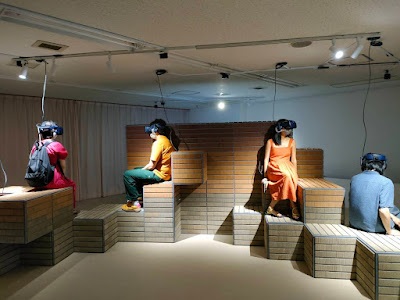
The installation is a collaboration with the INAX Live Museum (LIXIL Corporation) in Tokoname to produce the retro tiles referring to the second generation of the Imperial Hotel completed in 1923, and the entire installation is made up of these tiles stacked like cubes in a Minecraft game. The audience can sit in the giant tile installation and watch the VR video while being part of the installation itself. This work combines earth skills and digital technology to depict a geological and technological history through a world on the digital cloud.

《土的工藝》以愛知縣常滑市的地質,以及當地陶瓷產業的歷史為主軸,呈現人類與土地共生的主題。此作品的影像部分是透過VR虛擬實境呈現,是透過在遊戲「Minecraft」中拍攝製作而成,透過與專業玩家社群的合作,他們在遊戲中搭建愛知縣地貌、來自世界各地的磁磚與馬桶、在人造島上的國際機場、當地知名的登窯、舊帝國酒店與古根漢美術館等場景。影片的旁白是由google小姐配音,她以遊戲導覽員的身份,帶領我們穿越在這些跨越不同時空的場景。

作品的裝置部分是與常滑市的INAX Live Museum(LIXIL Corporation)合作,復刻1923年完工的第二代帝國酒店當初的磁磚,整個裝置由這些磁磚組成,並如同Minecraft遊戲中的立方體一樣堆積而成。觀眾可以坐在巨大的磁磚裝置觀看VR虛擬實境影片,同時觀眾自身也成為了裝置的一部分。這件作品結合了土的技術以及數位的技術,透過在數位雲端上的世界,描述一段地質與技術交錯的歷史。


等晶播種 Crystal Seeding

等晶播種 Crystal Seeding

機械裝置 mechanical installation、三頻道錄像裝置 three-channel video installation、3D列印裝置 3D Printing Installation,32'15",2021
聲音共製:台灣聲響實驗室、台藝大聲響藝術實驗中心
Sound Co-production: Taiwan Sound Lab, Center for Sound Arts and Acoustics Research, NTUA
本作品獲文化部109年度科技藝術創作發展計畫補助
This work is granted by the Ministry of Culture's 2020 Technology and Arts Creative Development Subsidization Program

Crystal Seeding, created by three artists—Hsu Chia-Wei, Chang Ting-Tong, and Cheng Hsien-Yu, is a collaborative project with Taisugar's Huwei Sugar Factory. Sucrose being the inspirational departure point, the project addresses Taiwanese puppet theatre, experimental music, sugar 3D printing, and robotic arms, through whose intertwined complexity the history of a small town in the last century is investigated. The sugar industry was among the first to witness early modernization in Taiwan. In 1907, Dai Nippon Sugar Manufacturing Co. built the Huwei Sugar Factory, one that produced the most sugar in this country at the time. With the introduction of industrialized factories, new industrial towns started to appear in Chiayi-Tainan Plain. Huwei Township was then transformed into the most modernized city/town in Southern Taiwan. Because of the Pacific War outbreak, Huwei Sugar Factory was later expanded for ethanol production.

The alcoholic fermentation converting sugars into energy and producing ethanol provided the fuel to Kamikaze, the Japanese Special Attack Unit, and resulted in the destructive bombing attacks at the factory. The sugar industry dwindled after the war, and the town was no longer up and coming. The multi-channel video installation tells a narrative adapted from Japanized puppet theatre piece Kurama Tengu performed by the Sheng Ping Puppet Troupe. By merging reality and fictionality, the project illustrates the history of Huwei Township. Moreover, the recorded performance of composer Hui Tak-Cheung in the sugar factory, interspersed in the video, turns the factory into site-specific "musical instruments." In a theatre-like setting, a robotic arm, a 3D printer, and flag carrier emblems are all actors in this play who enter the stage as the narrative unfolds, and play various "roles" as well as demonstrate different "incidents" on stage.

《等晶播種》為許家維、鄭先喻、張碩尹三位藝術家共同製作。本計劃與台糖虎尾糖廠合作,以蔗糖為引子延伸布袋戲、實驗音樂、糖3D列印科技與機械手臂,在此複雜又彼此關聯的網絡爬梳小鎮百年歷史。糖業為臺灣首波現代化工業,1907年,大日本製糖株式會社興建的虎尾糖廠為當時產量最高的糖廠。機械化工業引進,產業型新興市鎮在嘉南平原應運而生,虎尾鎮成為當時南臺灣最現代化的城鎮。太平洋戰爭開啟,虎尾鎮酒精糖廠因用以發酵糖蜜的無水酒精為神風特攻隊能源,而遭毀滅式轟炸。糖業小鎮也於戰後沒落。

《等晶播種》為多頻道影像裝置,影片敘事改寫自皇民化布袋戲《鞍馬天狗》並由戲團昇平五洲園演出,虛實結合訴說虎尾鎮歷史;片中穿插作曲家許德彰在虎尾糖廠內的演奏,將工廠轉化成現地「樂器」;如同劇場的環境,機械手臂、3D列印機、航空旗號化身劇目演員,隨故事推進扮演不同的「角色」與「事件」。


礦物工藝 Mineral Crafts

礦物工藝 Mineral Crafts

五頻道錄像裝置 five-channel video installation,9’52”,2018
本作品由新北市立黃金博物館委託製作 
Commissioned by Gold Museum, New Taipei City

Jinguashi is recognised for its gold and copper mines, and the subject of Mineral Crafts is copper. The work connects the geographical features of Jinguashi and the development of the mining industry during the Japanese occupied time with the key role that copper plays in humanity’s past, present and future.

Copper was the first metal to be used by humans. It is used widely for household objects, weaponry, electrical conductors, etc. and has changed our lives on a massive scale. The work is made in the online game Minecraft. With collaboration from the gaming community, we created the terrain of Jinguashi, the 13-level remains of Copper Refinery, and the Four Joined Japanese-style Residence. The narration for the video was made with Google Text-to-Speech, acting as a guide in the game to help the audience immerse in the history of Jinguashi and its connections with the rest of the world.

In the real world, copper has propelled human society from ancient times to the Information Age. The technology developed in the Information Age further allows us to do mining and construction in the virtual world of Minecraft. This is an Internet of Things built on minerals. With copper as an overarching theme, Mineral Crafts attempts to expand the historical context of a single region into a history of technology that chronicles the symbiosis of people and objects.


《礦物工藝》以銅為主題,從金瓜石地理樣貌和日本殖民時期的礦業發展敘事連結到銅在人類歷史、現今與未來的緊密關係。銅是人類最早使用的金屬,而後大規模的改變人類生活的樣貌,從日用品、武器到電力傳導的媒介,由遠古的石器社會帶領人類邁向資訊社會。這件作品是在遊戲「當個創世神」中拍攝製作,透過與專業玩家社群的合作,在遊戲中搭建金瓜石地貌、十三層選煉廠與四連棟宿舍等場景。影片的旁白則是由google小姐配音,她以遊戲導覽員的身份,帶領我們一同認識金瓜石區域歷史與世界的關係。現實世界中的銅以極其微妙卻廣大的方式推進了資訊社會的發展,使得我們能夠在遊戲的世界中,進行採礦與建造,這是由礦物所搭建起的當代物聯網迴圈,以銅作為一個貫穿的元素,這件作品試圖將單一區域的歷史脈絡,擴延至人與物共生的技術發展史。


SH-SY5Y

SH-SY5Y

單頻道錄像裝置 single-channel ultra HD video,10',2013

This artwork began in early 2012 and is a collaboration with Academia Sinica Applied Sciences Laboratories and Chang Bing Show Chwan Memorial Hospital Remote Minimally Invasive Surgery Laboratory. SH-SY5Y is a human neuroblastoma cell line, and this artwork is based on this particular subject matter. This type of neuroblastoma cell is one of the most dangerous malignancies. The person suffering from it may experience abnormal brain activities, making the patient delirious and unable to decipher reality from illusion. SH-SY5Y cells can form mounds and can spread to other body parts at a rather fast pace.

This artwork is titled "SH-SY5Y", and the SH-SY5Y cells contained in the artwork were derived from a four years old girl's cancer cells forty years ago; including the shipping fee, the cost of the cells totalled 560 US dollars. Conventionally, cancer cells are regarded as "diseases"; however, these petri dishes cultivated cells are also "biological organisms", and at the cell production and marketing centre, they are considered as "products". The video was shot at a remote minimally invasive surgery laboratory. With this type of surgery, usually two holes the size of a mosquito bite are required; one hole is to allow the endoscope to enter, and the other is for the surgical scalpel to conduct the operation. The doctor only needs to look at the monitor to carry out the surgical procedure, and this laboratory is dedicated to the research of remote minimally invasive surgeries, which may include such surgeries with doctors operating from the city on soldiers out in the battleground in the Middle East, or perhaps even operating on astronauts in space.

The narration is recorded by the head of Academia Sinica's Bio Microfluidic Applications Laboratory, who is also made into an animated character. The images of the cancer cells were captured by the laboratory's confocal microscopy and are from an actual SH-SY5Y neuroblastoma cell line. This portion involves the recording of actual cancer cells with a microscopic camera. These are cancer cells cultivated by the Academia Sinica Applied Sciences Laboratories, which live in a petri dish and are used for research. Viewing from a different perspective, these cancer cells can live outside the human body. Conventionally, cancer cells are regarded as "diseases", but these cells in the petri dish are considered "biological organisms". This video is ten minutes in length and is projected on a large 14 meters wide and 5 meters high projection wall. Additionally, three projectors are used to constitute a large image through conflation techniques.

The on-site lightbox installation includes a petri dish containing the SH-SY5Y human neuroblastoma cell line, which is genetically modified in vitro cells. The liquid the petri dish holds contains actual SH-SY5Y cancer cells provided by Academia Sinica's Applied Sciences Laboratories. Each gram contains more than one billion living cancer cells, with the SH-SY5Y cancer cells making a real appearance in the exhibition venue.


此作品為2012年初開始與中研院的應用科學實驗室以及彰濱秀傳醫院的遠距微創手術實驗室的合作。SH-SY5Y是腦神經瘤癌細胞株的名稱,展出的作品環繞著這個對象發展。這種癌細胞是目前最為危險的一種癌細胞之一,尤其當患者受到此種癌細胞的入侵,會開始影響腦部的正常活動,許多病患逐漸分不清真實與虛幻。也由於此種細胞株有許多突出物,非常易於轉移至身體其它部位,擴散的速度也非常快。

作品名為「SH-SY5Y」,作品中的SH-SY5Y細胞來自於四十年前一位四歲小女孩的癌細胞,包含運費定價是560美元。癌細胞在一般認知中是關於「疾病」,但這些生長於培養皿的細胞也是一種「生物」,在細胞產銷中心中,它則是「產品」。影片場景拍攝於遠距微創手術實驗室,遠距微創手術往往只需要開兩個如同蚊子叮的洞,一個讓內試鏡攝影機進入拍攝,另一個洞則是讓手術刀進入工作。而醫生只需要看著螢幕即可進行手術,因此該實驗室致力於遠距的微創手術研究,例如醫生可以在都市為遠在中東戰區的士兵開刀,甚至是位太空人進行手術。

旁白是由中研院Bio Microfluidic Applications Laboratory負責人所錄製,並繪製成動畫角色,癌細胞畫面則是透過該實驗室的共鄂焦顯微鏡所拍攝而成,這是真實的SH-SY5Y腦神經瘤癌細胞株,這個部分是透過顯微攝影機拍攝真實癌細胞。是中研院的應用科學實驗室內所培養的癌細胞,這種癌細胞生長於培養皿中,用於研究用途。另一個面向而言,這些癌細胞是可以外於人體而存活的,癌細胞在一般人既定映像中關於的是「疾病」,但這些生長於培養皿的細胞本身其實是一種「生物」。這部影片片長共10分鐘。這件作品投影在14公尺寬5公尺高的巨型投影牆,並以三台投影機透過融接技術構成巨幅影像。

現場燈箱裝置內的培養皿放置了神經纖維母細胞瘤SH-SY5Y,這是經過基因改造的體外培養細胞。培養皿內部裝的液體則是來自中研院應用科學研究室所提供的真實SH-SY5Y癌細胞,每一公克包含10億以上的癌細胞活體,也是SH-SY5Y癌細胞在展場中的真實現身。


疊錄 Overdubbing

疊錄 Overdubbing

雙頻道錄像裝置 two-channel video installation,11',2011

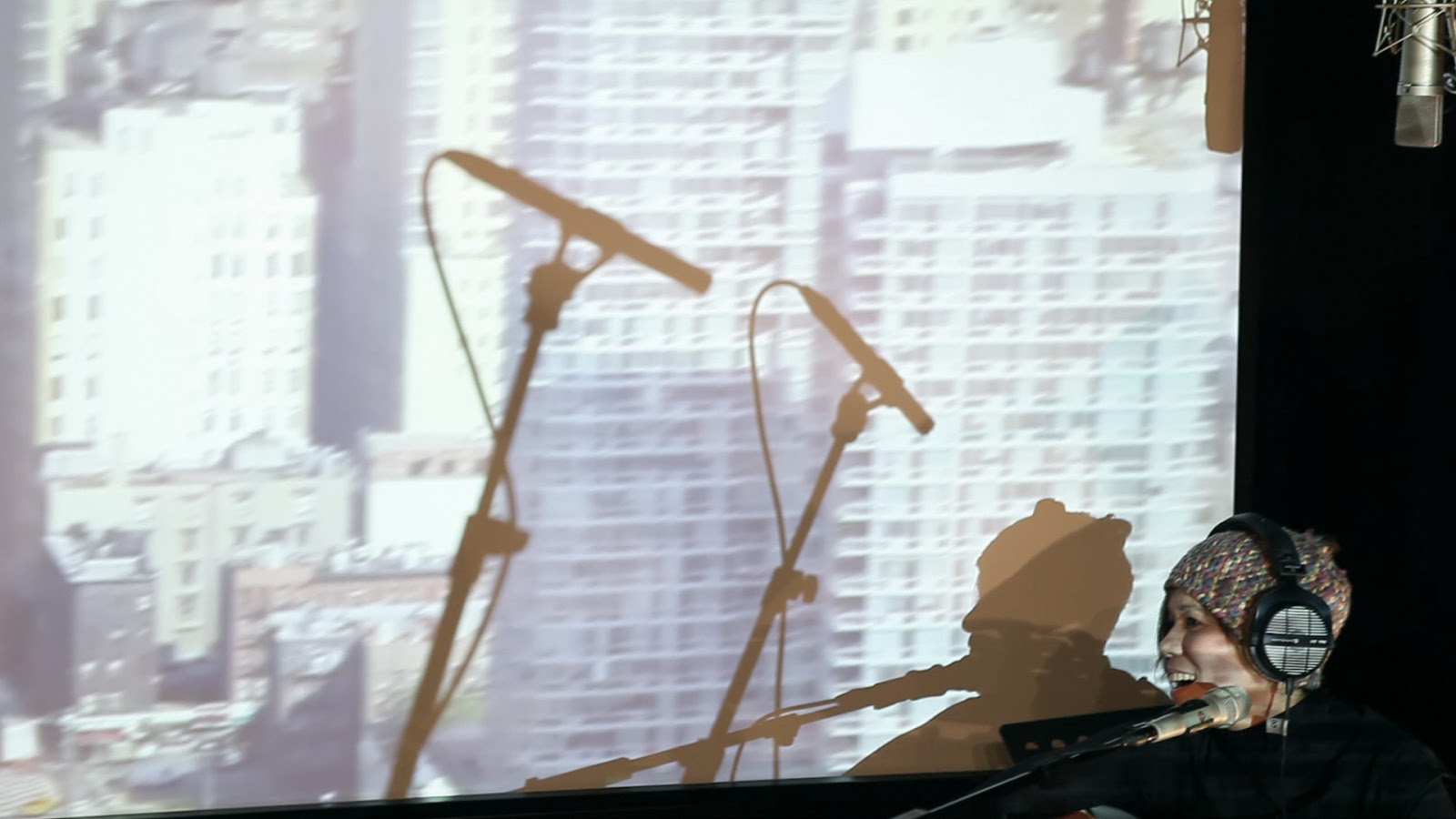
Chia-Wei Hsu partnered with the band "relax-ONE," filmed the rehearsal of the band "relax-ONE," and projected it on a double-sided screen to present the processes of the sight and sound prospectively. The projection used for this work is connected with the concept of off-screen. On the one hand, the artist shot the band rehearsing at the studio; on the other hand, the image of the recording engineer is shown. The audience can only see one side at a time instead of both sets. They have to walk around the projection to get the full picture. What is behind the image is a process of reemergence and production; at the same time, it is also a sculpture suspended in the air.

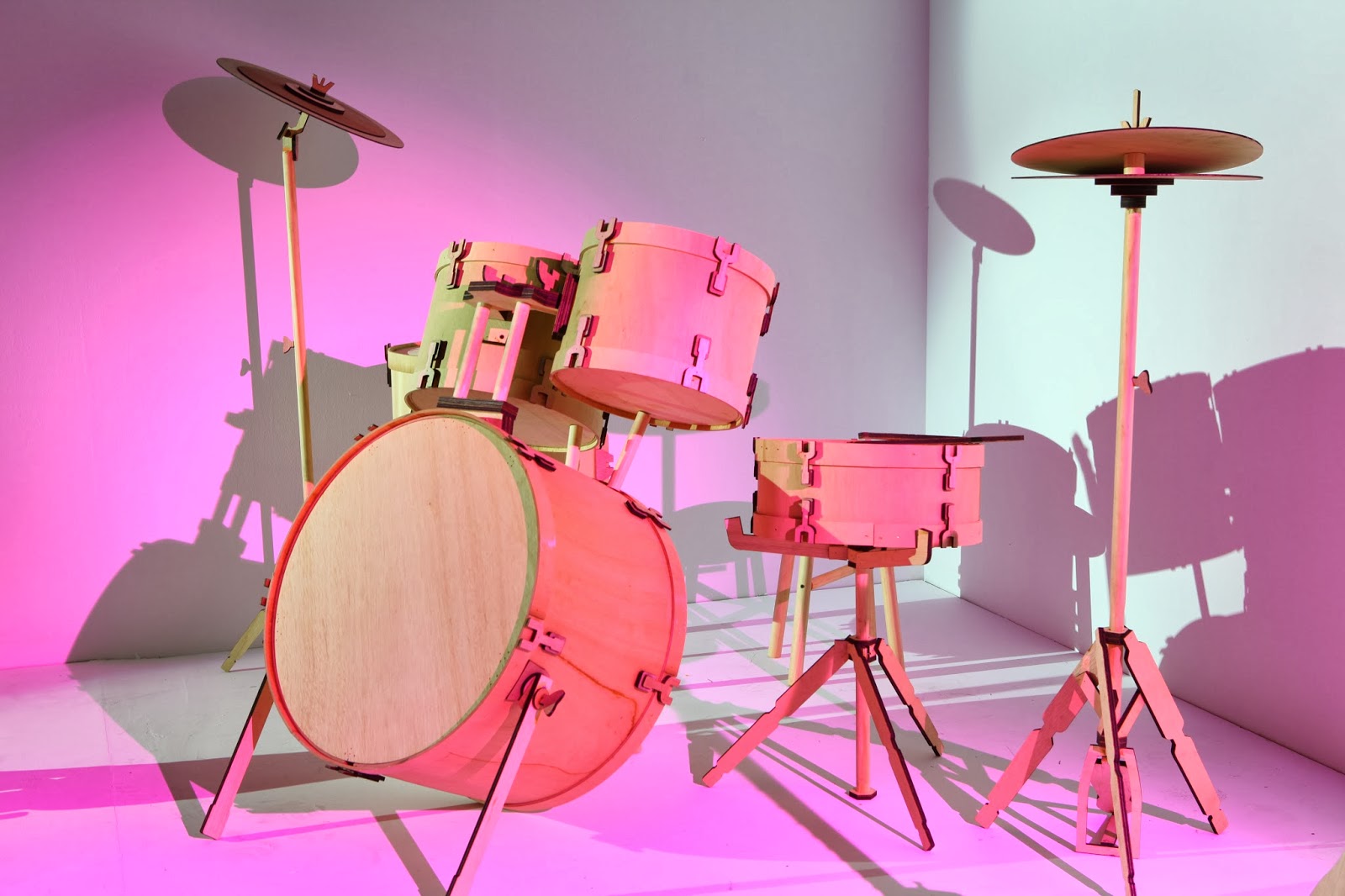
On display on site are some instruments and stage lightings, and playing in the background is pre-recorded music. However, what the musicians are playing on site are fake soundless instruments. The most interesting aspect is that we cannot see the music video on screen; instead, what is shown is the set where the music video was made. Presented to the audience is a visual setting that is quite bizarre, with soundless instruments and a performer with her mouth shut. In other words, it is an act of realistically portraying something imaginative.

許家維與「輕鬆玩」樂團合作,拍攝「輕鬆玩」樂團排練的場景,以正反投影呈現影像與聲音分開製作的過程;藝術家在這件作品中相當關心畫外場的概念,投影的其中一面是拍攝樂團在練團室的畫面,而另一面則是錄音師在錄音室的畫面。觀眾一次只能看到一個畫面,無法同時看到兩個畫面,必須繞著正反投影觀看才能獲得影像的全貌,了解影像生產的背後的再現與生產過程,同時它也像是懸掛在空中的雕塑。

展出現場舞台呈現的是一批以假亂真的演奏樂器,一堆舞台燈光的擺設,背景播放著事先錄好的樂音,但樂手在現場彈奏的卻是無聲的假樂器。真正有趣的地方是,我們無法在螢幕上看到音樂錄影帶,而是看到拍攝音樂錄影帶的一個現場。在此,觀眾感知到的真實情況是一個不可置信的視界—樂器無法發聲、演唱者雙唇緊閉;換言之,也就是一種想像敘事的真實呈現。