土的工藝 Earthcraft
VR、單頻道錄像 single-channel video、磁磚裝置 tile installationVR: 14'43"、單頻道錄像 single-channel video: 9'30",2022
本作品由愛知三年展委託製作,獲文化部補助
Commissioned by the Aichi Triennale and granted by the Ministry of Culture
Earthcraft is a theme based on the geology of Tokoname, Aichi Prefecture, and the history of the local ceramic industry, presenting the symbiosis between humans and the land. The video part of this work is presented through virtual reality (VR), filmed and produced in the game 'Minecraft'. They build scenarios such as the Aichi landscape, tiles from around the world and toilets, an international airport on a man-made island, the famous local kiln, the old Imperial Hotel and the Guggenheim Museum. The film's voice-over is Miss google, who takes us through these scenes across time and space in her role as a game guide.
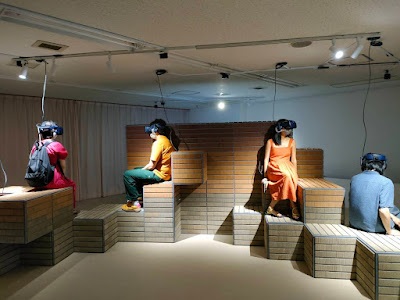
The installation is a collaboration with the INAX Live Museum (LIXIL Corporation) in Tokoname to produce the retro tiles referring to the second generation of the Imperial Hotel completed in 1923, and the entire installation is made up of these tiles stacked like cubes in a Minecraft game. The audience can sit in the giant tile installation and watch the VR video while being part of the installation itself. This work combines earth skills and digital technology to depict a geological and technological history through a world on the digital cloud.
Earthcraft is a theme based on the geology of Tokoname, Aichi Prefecture, and the history of the local ceramic industry, presenting the symbiosis between humans and the land. The video part of this work is presented through virtual reality (VR), filmed and produced in the game 'Minecraft'. They build scenarios such as the Aichi landscape, tiles from around the world and toilets, an international airport on a man-made island, the famous local kiln, the old Imperial Hotel and the Guggenheim Museum. The film's voice-over is Miss google, who takes us through these scenes across time and space in her role as a game guide.
The installation is a collaboration with the INAX Live Museum (LIXIL Corporation) in Tokoname to produce the retro tiles referring to the second generation of the Imperial Hotel completed in 1923, and the entire installation is made up of these tiles stacked like cubes in a Minecraft game. The audience can sit in the giant tile installation and watch the VR video while being part of the installation itself. This work combines earth skills and digital technology to depict a geological and technological history through a world on the digital cloud.
《土的工藝》以愛知縣常滑市的地質,以及當地陶瓷產業的歷史為主軸,呈現人類與土地共生的主題。此作品的影像部分是透過VR虛擬實境呈現,是透過在遊戲「Minecraft」中拍攝製作而成,透過與專業玩家社群的合作,他們在遊戲中搭建愛知縣地貌、來自世界各地的磁磚與馬桶、在人造島上的國際機場、當地知名的登窯、舊帝國酒店與古根漢美術館等場景。影片的旁白是由google小姐配音,她以遊戲導覽員的身份,帶領我們穿越在這些跨越不同時空的場景。
作品的裝置部分是與常滑市的INAX Live Museum(LIXIL Corporation)合作,復刻1923年完工的第二代帝國酒店當初的磁磚,整個裝置由這些磁磚組成,並如同Minecraft遊戲中的立方體一樣堆積而成。觀眾可以坐在巨大的磁磚裝置觀看VR虛擬實境影片,同時觀眾自身也成為了裝置的一部分。這件作品結合了土的技術以及數位的技術,透過在數位雲端上的世界,描述一段地質與技術交錯的歷史。