顯示包含「Installation」標籤的文章。顯示所有文章

橡膠球 Rubber Balls

橡膠球 Rubber Balls

三頻道錄像裝置、OLED螢幕、鐵架、天然橡膠布
Three-channel video installation  OLED screens, iron frame, natural rubber sheets. 400 x 225 cm. 3' 35". 2025

本作品由阿姆斯特丹電影博物館提供檔案影片素材作為創作素材
由臺中市立美術館委託創作

This project is supported by the Eye Filmmuseum, Amsterdam, which provided archival documentary footage as creative material.

Commissioned by the Taichung  Art Museum


Rubber Balls explores the implications of the rubber exploitation in Indonesia by Dutch colonists through two major levels of interpretation: the first is an analysis of the original footage captured between 1913-1945 by the Dutch colonists in the East Indies, collected at the Eye Filmmuseum in Amsterdam; and the second is the tension of modernity, meaning the discrepancy between traditional agriculture and the extractive colonial model. 

Chia-Wei Hsu uses original footage, a colonial-era novel and audio recordings of a traditional Indonesian musician who plays at a rubber farm, merging historical, botanical and sensorial research with AI-generated imagery. The work aims to create a counter-memory document, opposed to traditional archive-making. The three-channel video installation contains three distinct visual lines: the original documentary footage from the museum’s collection; the imagery generated by artificial intelligence; and the way in which the AI thinks within high-dimensional space. 

The artist drew inspiration from Hella S. Haasse's 1948 novel Oeroeg, which talks about the childhood friendship between two boys, one Dutch and one Indonesian, on a rubber plantation in the Dutch East Indies. As they mature, their bond deteriorates due to the racial and political tensions of the era. In Hsu’s reinterpretation, artificial intelligence was employed to inform the narrative action in the novel, blending historical themes with technological perspectives.

《橡膠球》探討荷蘭殖民時期在印尼進行的橡膠產業剝削,藝術家取用阿姆斯特丹國家電影博物館所藏1913至1945年間荷蘭殖民者於東印度群島拍攝的原始影像,透過人工智慧訓練,創造一份有別於傳統檔案建構邏輯的反記憶文件。許家維結合原始影像、殖民時期小說,以及一位在橡膠農場演奏的印尼傳統音樂家錄音,將歷史、植物學與感官研究交織於AI生成影像之中。透過印尼的橡膠布所構成的三頻道錄像裝置,共包含三條視覺線索:博物館典藏的原始紀錄片影像、人工智慧生成荷蘭與印尼孩童的影像,以及AI於高維度空間中的思考路徑。


矽晶小夜曲 Silicon Serenade

 矽晶小夜曲 Silicon Serenade

虛擬實境、電腦主機裝置、浮球裝置、拼接螢幕
Virtual reality, host computer installation, buoyant ball installation, spliced screens. 450 x 100 cm. 5 min. 2024

The beach is covered with silicon, an essential component of the semiconductor chips used in various digital technology products. Through a series of processes, circuits are etched onto wafers and then cut into many fingernail-sized chips. These powerful chips are what make artificial intelligence possible. This work traces the origin of the materiality behind these AI chips through their manufacturing process, presented through a kind of digital texture. 

This work uses a game engine to create a virtual beach scene. As the waves fluctuate, several virtual screens on the sea surface play live videos. These videos include cello performances by underwater performers and footage of a laboratory at the Hsinchu Industrial Technology Research Institute, showcasing the CoWoS chip manufacturing process which is so crucial for AI technology. The music in the work adopts an electronic style and was actually generated by AI. Using keywords extracted from the process involving the beach, silicon, wafers, and AI, the AI generated the lyrics, melody, and performance, and even sang the song. This AI-generated music is intertwined with the cello music, laboratory footage, and virtual beach. 

The exhibition’s installation consists of a VR headset, a floating sphere suspended in space, and an electronic screen. The floating sphere gently sways in the space, and the trajectory of its movement is directly linked to the images in the VR headset. This motion, generated by the dynamics of the floating sphere, is projected onto the electronic screen, presenting a first-person perspective of the sphere and its journey from physical to digital. 

沙灘上佈滿矽,它是運用在各種數位科技產品中的半導體晶片的重要組成元素。透過一系列的製程,電路被蝕刻到晶圓上,再被切割成許多指甲大小的晶片。這些功能強大的晶片使人工智慧成為可能。這件作品透過AI晶片背後的製程,回溯源起的物質性,呈現數位的觸感。 

此作品以遊戲引擎搭建了一個虛擬沙灘的場景,隨著海浪的波動,海面上的數個虛擬電子螢幕播放著實拍影片,這些影像包括了水面下表演者的大提琴演奏,以及藝術家在新竹工研院所拍攝的實驗室,這是AI技術關鍵的CoWoS晶片製程。作品的音樂採用了電子曲風,是由AI自動生成,透過沙灘、矽、晶圓、AI這段製程當中所提取的關鍵字,生成歌詞、旋律和演奏,並由AI演唱。這段AI所生成的音樂交織著大提琴樂音、實驗室畫面與虛擬沙灘。 

展覽裝置是由VR頭顯裝置、懸掛在空間中的浮球與電子螢幕所構成,浮球在空間中緩緩地晃動,這個運動軌跡連動了VR頭顯裝置當中的影像,這是由浮球動態所產生的運鏡,並投放在電子螢幕上,呈現了浮球的第一人稱視角,以及這段物質到數位的旅程。 


土的工藝 Earthcraft

土的工藝 Earthcraft

VR、單頻道錄像 single-channel video、磁磚裝置 tile installation
VR: 14'43"、單頻道錄像 single-channel video: 9'30",2022

本作品由愛知三年展委託製作,獲文化部補助
Commissioned by the Aichi Triennale and granted by the Ministry of Culture

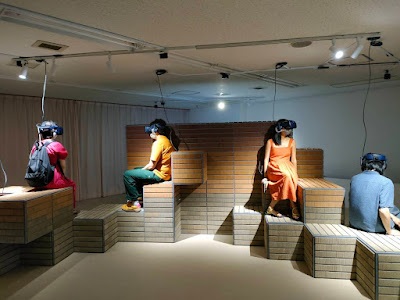
Earthcraft is a theme based on the geology of Tokoname, Aichi Prefecture, and the history of the local ceramic industry, presenting the symbiosis between humans and the land. The video part of this work is presented through virtual reality (VR), filmed and produced in the game 'Minecraft'. They build scenarios such as the Aichi landscape, tiles from around the world and toilets, an international airport on a man-made island, the famous local kiln, the old Imperial Hotel and the Guggenheim Museum. The film's voice-over is Miss google, who takes us through these scenes across time and space in her role as a game guide.

The installation is a collaboration with the INAX Live Museum (LIXIL Corporation) in Tokoname to produce the retro tiles referring to the second generation of the Imperial Hotel completed in 1923, and the entire installation is made up of these tiles stacked like cubes in a Minecraft game. The audience can sit in the giant tile installation and watch the VR video while being part of the installation itself. This work combines earth skills and digital technology to depict a geological and technological history through a world on the digital cloud.

《土的工藝》以愛知縣常滑市的地質,以及當地陶瓷產業的歷史為主軸,呈現人類與土地共生的主題。此作品的影像部分是透過VR虛擬實境呈現,是透過在遊戲「Minecraft」中拍攝製作而成,透過與專業玩家社群的合作,他們在遊戲中搭建愛知縣地貌、來自世界各地的磁磚與馬桶、在人造島上的國際機場、當地知名的登窯、舊帝國酒店與古根漢美術館等場景。影片的旁白是由google小姐配音,她以遊戲導覽員的身份,帶領我們穿越在這些跨越不同時空的場景。

作品的裝置部分是與常滑市的INAX Live Museum(LIXIL Corporation)合作,復刻1923年完工的第二代帝國酒店當初的磁磚,整個裝置由這些磁磚組成,並如同Minecraft遊戲中的立方體一樣堆積而成。觀眾可以坐在巨大的磁磚裝置觀看VR虛擬實境影片,同時觀眾自身也成為了裝置的一部分。這件作品結合了土的技術以及數位的技術,透過在數位雲端上的世界,描述一段地質與技術交錯的歷史。


電子流動 Electronic-mobility

電子流動 Electronic-mobility

三頻道錄像裝置 three-channel video installation、真空管收音機 valve radio,2’57”,2022

In Electronic-mobility, Hsu Chia-Wei dives into the technical history of electronic products, starting with the valve radio produced by Panasonic in Taiwan in the 1950s and 60s to the new battery technology of today. This context demonstrates a shift from the analogue to the digital era. In this project, the artist collaborates with XING Mobility to film the production process of the battery and the electric car under the code name “Miss R.” He also invites a rapper to make the technical principles of making valve radio and electric car battery into a rap song. As the speed of the electric F1 race car accelerates, the rapper also switches gears and increases the tempo and pace of speech.

The sound in Electronic-mobility is broadcasted through a vacuum tube radio produced by Panasonic in the 60s, and the video is shown on an LED screen. The overall power required to play the work is from the battery manufactured by XING Mobility. Consequently, the technology of the vacuum tube and the contemporary semiconductor and battery technologies are amalgamated in this installation, whereas the way of electrons flow shows this particular technical history and the sci-fi imagination of the future.


此作品以電子產品背後的技術歷史為主軸,從台灣松下公司在1950、60年代所生產的真空管收音機到今日嶄新的電池科技,這個脈絡也展現了類比到數位時代的轉變。在這個計畫中,藝術家與行競科技合作,拍攝電池製作的生產流程,以及代號MissR的電動車。並邀請饒舌歌手,將真空管收音機以及電動車電池的技術原理編寫成一首饒舌歌曲。隨著電動F1賽車的加速,饒舌也不斷換擋,節奏、語速越來越快。

這件作品的聲音是透過60年代台灣松下所生產的真空管收音機播放,而影像呈現在液晶螢幕上,整體所需的電力則是來自於行競科技的電池。真空管時代的技術與當代半導體及電池技術,兩者在這裝置中交融,其電子流動的方式展現了這段技術的歷史與對未來科幻的想像。


截至2021年的工作路徑 Work Paths Until 2021

截至2021年的工作路徑 Work Paths Until 2021

光雕投影裝置 projection mapping installation, 16'40",2021
紀錄片製作:財團法人公共電視文化事業基金會
Documentary Production: Taiwan Public Television Service Foundation  
聲音共製:臺藝大聲響藝術實驗中心
Sound Co-production: Center for Sound Arts and Acoustics Research, NTUA
動畫共製:臺藝大科技藝術實驗中心
Animation Co-production: Innovation Center for Art and Technology, NTUA

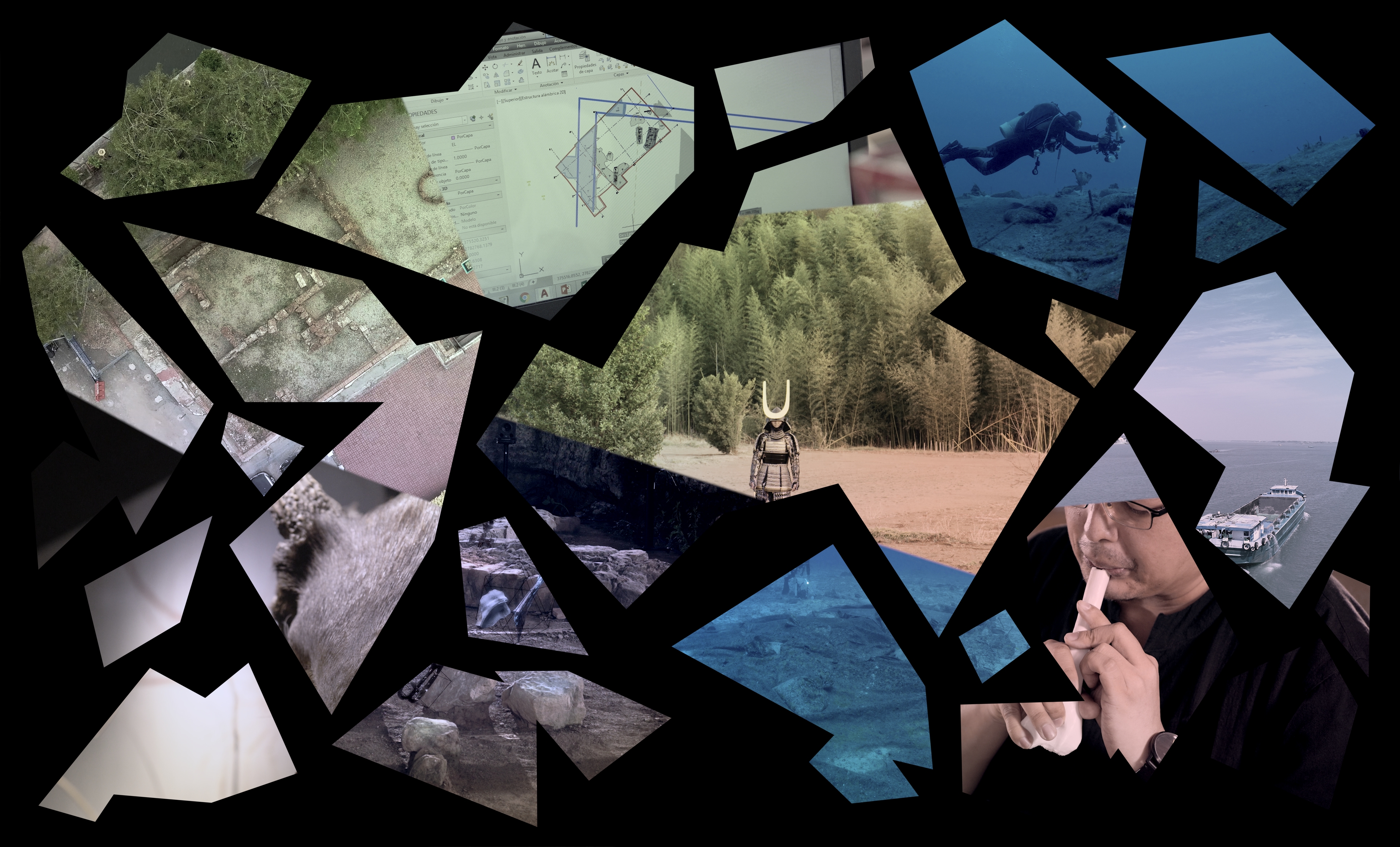
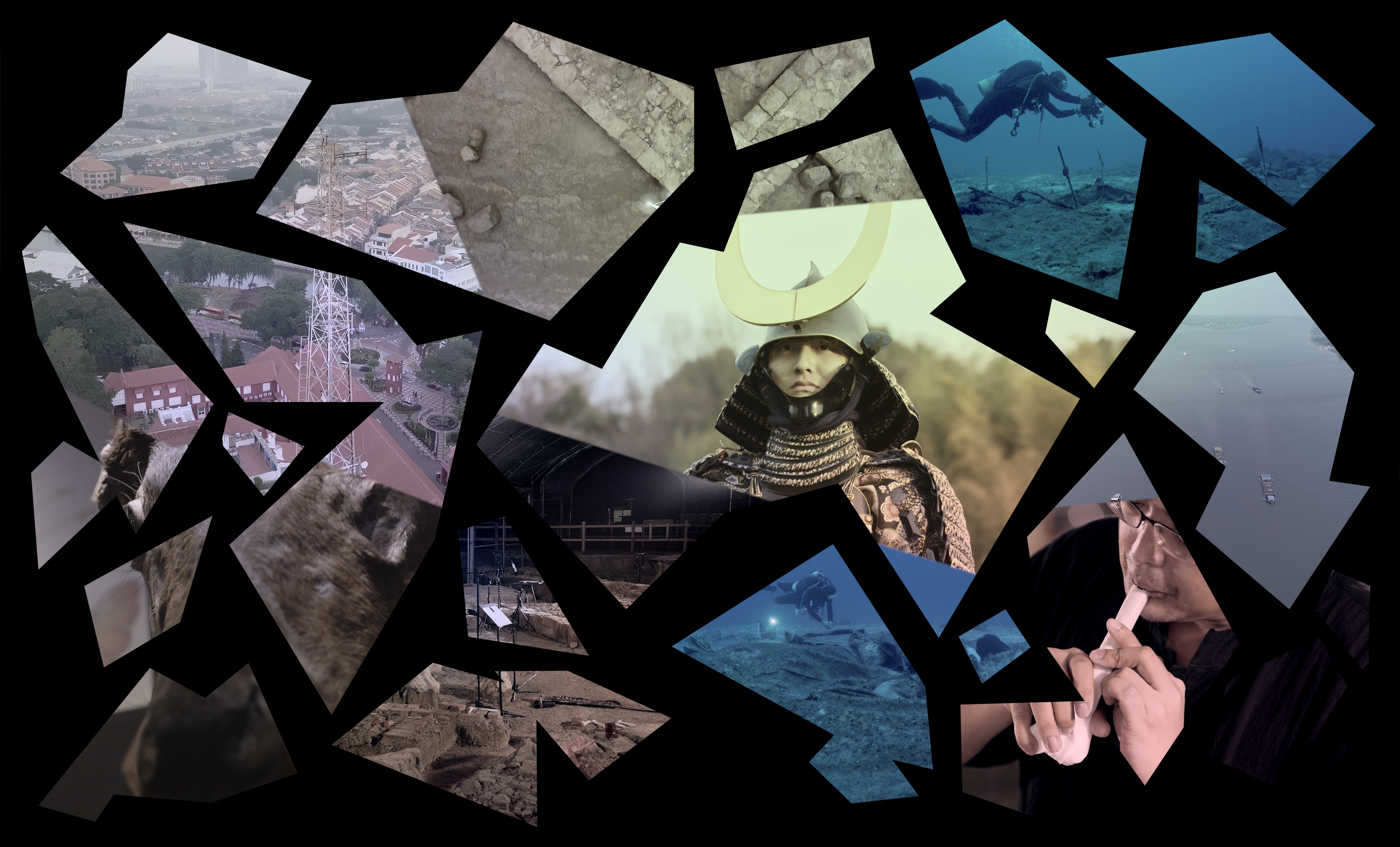
The artwork reveals Chia-Wei Hsu's creative path between 2019 and 2021, centring on several archaeological scenes and findings. From 2018 to 2020, the archaeological team successively discovered the intact foundation of the walls and graves as the Church of Todos los Santos remains. The Fort Noord-Holland, rebuilt in 1642 from the original "Fort San Salvador," used to stand in the area, while the archaeological traces found centuries later brought the artist's exploration to the Dutch Governor's House in Malacca built in 1641 and the war between Cambodia and the Dutch in 1643, before further expanding the interrelated network, out of an interest in archaeology, to different sites such as the underwater discoveries off Green Island and the Shinshe Stone Coffin in Hualien.

The video features materials remade from Hsu's previous works, including Black and White – Malayan Tapir (2018), Samurai and Deer (2019), Stones and Elephants (2019), Is the Stone Coffin a Coffin? (2021) and A Performance in the Church (2021). The borrowed clips become fragments here, which not only visualize a network stringed by Hsu's personal creative path but also allow the inherently heterogeneous scenes to be interwoven as hyperlinks in the cyber world.

The sound of the piece comes from the musical performance Hui Tak-Cheung composed for A Performance in the Church. Originally taking place at the archaeological site at Hoping Island, the music edited in this version presents a co-performance between different archaeological scenes.

這件作品呈現了藝術家在2018-2021年間的工作路徑,這個路徑是沿著考古的主題而展開。2018-2020年考古團隊陸續在北台灣和平島找到了諸聖教堂的完整牆基以及墓葬,這個區域曾經有一座1642年改建的北荷蘭城(前身為聖薩爾瓦多城),從這個考古線索出發,藝術家的工作路徑進一步連結了荷蘭東印度公司於1641年建造的麻六甲總督府,以及1643年在柬埔寨發生的柬荷大戰。除此之外,對於考古的興趣驅使,這個路徑再連結到不同的考古場景,包括台灣東海岸的綠島水下考古以及花蓮新社岩棺。

影像的素材來自於過去不同作品的再製,包括 2018年的《黑與白-馬來貘》、2019年的《武士與鹿》以及《石頭與大象》、2021年的《岩棺是不是棺》與《在聖堂裡的一場演出》。這些來自於其他作品的既有影像,在這裡成為影像的碎片,既呈現了藝術家透過個人行動路徑所串起的網絡,也如同當今網際網路的超連結方式,異質的場景彼此交織連結。

這件作品的聲音來自於作曲家許德彰為《在聖堂裡的一場演出》這件作品所製作的音樂表演,當時這場演出是在和平島的考古現場進行,在這次的作品版本中,則成為不同考古場景之間的共演。


岩棺是不是棺 Is the Stone Coffin A Coffin?

岩棺是不是棺 Is the Stone Coffin A Coffin?

單頻道錄像裝置 single-channel video installation、香蕉絲QR code banana weaving QR code,3'56",118 (W) x 128 (L) x 14.5 (THK) cm,2021

Centring on the Shinshe Stone Coffin in Hualien, the artwork brings archaeology, geology, and tribal culture together. As the prehistoric relic in Eastern Taiwan, the stone coffin may look like a coffin but not necessarily function as one, at least without any archaeological evidence to support it. The actual purpose of the stone coffin is no longer traceable. Still, it is known in the Kavalan tradition that the stone coffin played a role in the rain-beckoning ceremonies as if the Kavalan tribes were somehow linked with a more ancient civilization which came before it. The artist adopts the banana-weaving technique, a special craft practised in the Shinshe tribe, to create a QR code for a video. The video is filmed in two sites: one is where the stone coffin is displayed, as it documents the whole process of the 3D-scanning of the stone coffin, and the other is the mid-hill terrace in Shinshe where the stone coffin was first discovered and unearthed, in which the artist invites the slingshot team from the Fakong Tribe to join in the filming, asking them to shoot at a copper plate hanging on a big tree and the sound of the shots hitting at the plate becomes the basic rhythm of the video. It is also combined with the animation of the 3D stone coffin placed on the terrace and the rapped narration to materialize a conversation between the ancient and the contemporary.


此作品以花蓮新社岩棺作為主軸,連結起考古學、地質學與部落文化的關聯。岩棺為臺灣東部史前文化所遺留之器物,雖然造型類似棺,但在臺灣的考古學資料中,並未有作為棺的證據。岩棺的確切功能已不可考,但在噶瑪蘭族的傳統文化中,會利用岩棺舉行求雨祭祀,這就像是噶瑪蘭族部落與更古老的上一個文明的聯繫。

藝術家以新社部落獨特的香蕉絲工法,編織成一面QRcode,觀眾可用手機掃描這個 QRcode觀看影片。影片的拍攝地點有兩處,其一為目前岩棺的展示地點,記錄了3D掃描岩棺的工作過程。其二為原始發現岩棺的出土地點,現為新社部落半山的梯田,藝術家邀請了貓公部落的彈弓隊合作,影片中彈弓隊員朝著一棵大樹懸掛著的銅片射擊,彈丸擊中銅片的聲響成為了影片的主要節奏,並結合了3D岩棺合成在梯田的動畫,以及饒舌歌曲對於岩棺的種種描述,成為一個遠古與當代對話的場景。


貓捉老鼠 Cat and Mouse

貓捉老鼠 Cat and Mouse

單頻道錄像裝置 single-channel video installation、3D列印模型 3D printing model、特製展示櫃 customised showcase,6'30",81.5 (W) x 86 (L) x 120 (H) cm,2020

Cat and Mouse is a work of art that connects the history of Taiwan's "White Terror" era with archaeological history. In 1948, amateur archaeologist Wang San-pai (courtesy name Hong-bo) travelled to the Nanshikeng settlement located on the western slopes of Dadu Plateau and discovered prehistoric tableware, porcelain, and animal bones, thus naming the newly unearthed community the "Nanshikeng Site." However, this astounding archaeological project was discontinued due to the political climate of the time. Specifically, Wang San-pai was sentenced to prison for political reasons and executed in 1953, putting a screeching stop to a budding discovery. It was not until 2001 that the archaeological site was once again formally excavated under the direction of Dr Chu Whei-lee of the National Museum of Natural Science. 

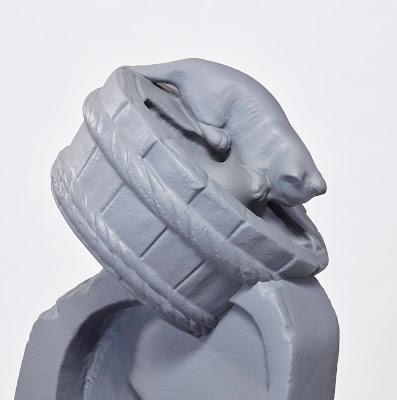
The video is a recording of the artist's visit to Taichung and an interview with Mr Wang San-pai's daughter, Master Chang Tsz, who revealed precious manuscripts, including Mr Wang San-pai's field survey reports on the Nanshikeng Site as well as the calligraphy works and letters he had written while imprisoned. She also presented a unique inkstone Mr Wang had hand-chiselled from a rock he had found while still attending elementary school. This long-cherished childhood object shows his profound interest in field research and archaeology. Another item in his collections is a piece of pottery depicting a cat and a mouse that alludes to the political climate during Mr Wang's lifetime. The artist utilized 3D scanning technology to convert images of the inkstone and pottery piece into digital data, then created the installation using 3D printing, harnessing the powers of modern technology to reveal this complex, intertwining piece of history between archaeology and politics. 


《貓捉老鼠》這件作品串起台灣白色恐怖時期歷史與考古歷史之間的關聯。在1948年間,業餘考古學家王參派先生(字鴻博)來到位於大肚山西麓的南勢坑聚落,發現一些食器、陶器及獸骨,將此新發現的遺址稱為南勢坑遺址。但是在當時的政治局勢下,這個考古研究並無法延續,因為王參派先生因政治因素被控入獄,最終在1953年被處決,成為他個人的未竟之業。直到2001年,這個考古遺址才在國立自然科學博物館的屈慧麗博士的主持下,再次進行深入的發掘。  

影片紀錄著藝術家前往台中拜訪王參派先生的女兒常慈師父的過程,師父展示了王參派先生珍貴的南勢坑田野調查報告手稿、入獄時所寫的書法與家書。其中還有一塊獨特的硯台,是王參派先生在其小學時,自己用撿到的石頭所鑿製而成。似乎他對田野物件及考古的興趣,從這兒時的物件上就可看出一些端倪。此外還有另一個遺物是王參派先生所收藏的貓捉老鼠陶皿,也反映了當時的時空背景。藝術家利用3D掃描技術將此硯台與陶皿轉化成數位資料,並以3D列印的方式製作了裝置,以當代技術轉化這段考古與政治糾結的歷史。