顯示包含「2012」標籤的文章。顯示所有文章

鐵甲元帥-小廟 Marshal Tie Jia - Temple

鐵甲元帥-小廟 Marshal Tie Jia - Temple

裝置 Installation,280 (H) × 240 (W) × 240 (L) cm,2012

At first, I had hoped to rebuild this disappeared temple directly on the island, but during the ritual of inquiry in your temple, you did not permit me to construct anything on the island. Acting in accordance with your direction, I chose to construct this temple in the studio. In order to do so, I asked an elderly man in the temple what the original temple on the island might have looked like. Still, he could no longer remember, so I could only imagine its scale based on the remains of its site on the island and its architectural style in consideration of the Chin-be Village where you reside. In the 1970s, the decline of the fisheries here caused a resident to migrate away, allowing the village to hide away from the ravages of modernism by preserving a series of traditional Eastern Min architectural structures. I carved the texture of the interior temple walls out of the marble and granite often found in this architecture, then painted it in greenish white and dark yellow among other colours. This is not only a fabricated set for filming but is also, at the same time, a real space, a materialisation of things imagined and remembered.


起初我希望能直接在島上重建這座已經消失的廟宇,但在那次廟裡的詢問儀式中,您不允許我在島上搭建任何東西,遵照您的指示,我選擇把這座廟宇搭建在工作室裡。為此我詢問了廟裡長者這座廟宇過去在島上可能的樣貌,他已回想不起,於是我便依據島上殘留的廟宇地基來想像它的大小,而廟裡的建築樣式則是參考您所居住的芹壁村。1970年後這裡的漁業蕭條使居民外移,村莊因此躲過現代化的破壞,保留了許多傳統的閩東建築,我依照這些建築裡常見的花崗岩與大理石來刻畫廟裡牆面的質感,並用青白、黃褐與磚紅等不同的顏色來繪製,這不僅是個拍攝用的虛構場景,同時也是個現實空間,是對於曾發生事物的想像與記憶的物質化。


回莫村 Huai Mo Village

回莫村 Huai Mo Village

單頻道錄像裝置 single-channel video installation, 8'20", 2012

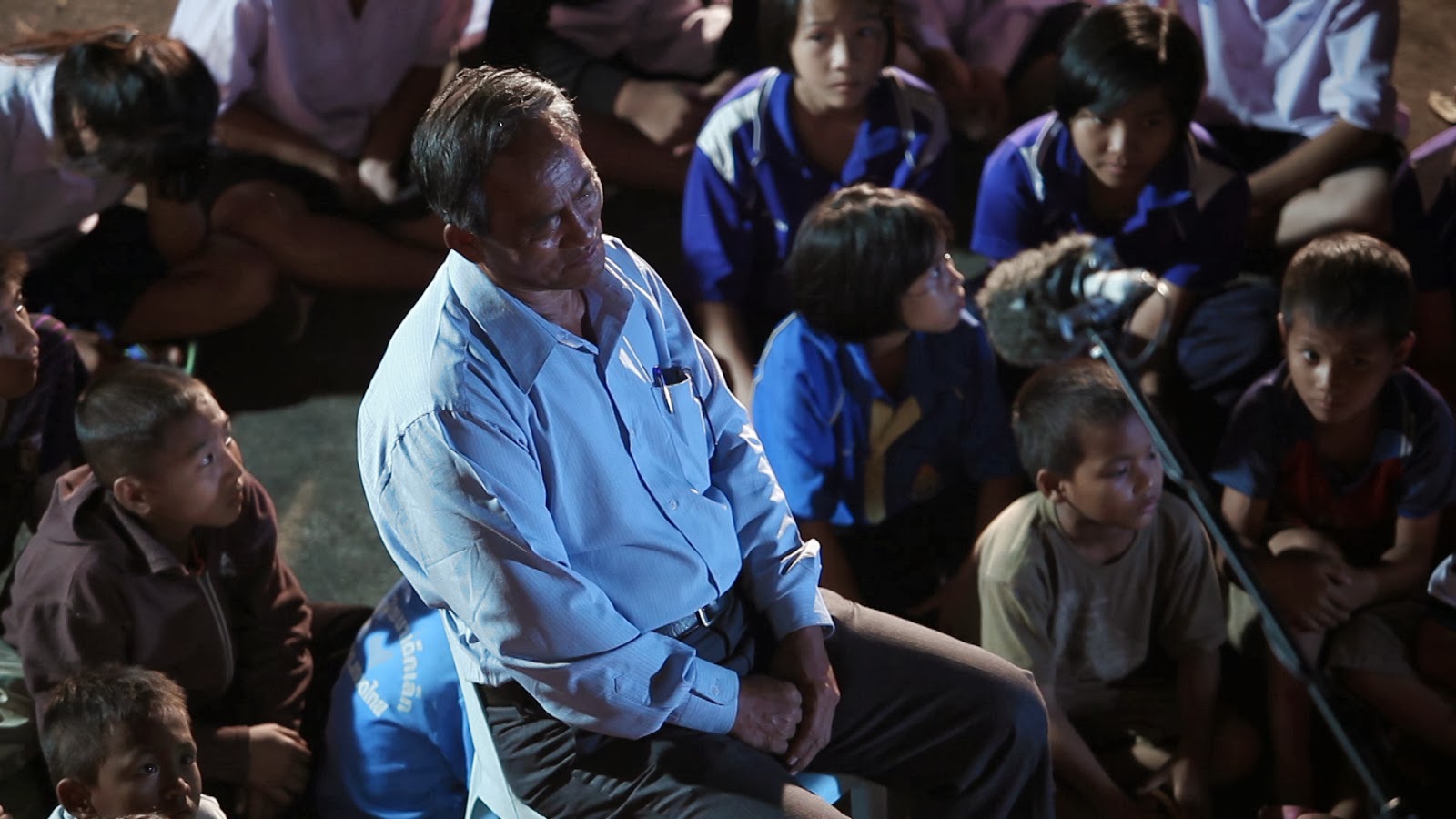
Huai Mo Village focuses on the Huai Mo Tzu Chiang House in Chiang Rai, Thailand. The founder of this house is a priest who served as a secret informer for the CIA during the Cold War period for thirty-nine years. His identity indicates the sources of this period of history and the change process. Starting from the 1980s, this region has turned into a world drug centre facing severe issues of smuggling and trafficking. Currently, there are around 70 children, most of whose parents have been killed or jailed due to drug trafficking or smuggling. Owing to the local drug problems, these kids have become orphans.

In this video work, the artist invited these children to form a filming team and jointly used the camera, sound recording equipment, lights, and other filming facilities. Children could visit the priest in person and listen to him tirelessly talk about the past of the Intelligence Bureau. The artist's customary style is extended in this work – the people telling the stories, the people listening to the stories, the filming crew made up of orphans, with the artist standing furthest back, observing it all and exploring a complex history of this region.


作品《回莫村》關注於泰國清邁回莫村的自強之家,創辦人是一位牧師,但同時在冷戰時期,他也秘密地擔任CIA情報員,持續了有39年的時間,他的身份也點出了這段歷史的源頭及變化的過程。此地從80年代開始成為世界的毒品中心,走私與販賣問題極為嚴重,目前有大約70位左右的院童,這些孩童的父母親大多是因為販毒或走私毒品而遇害或入獄,因為當地的毒品問題而成為孤兒。

在這件錄像作品中,藝術家邀請這些孩童成為拍攝團隊,與他們共同使用攝影機、錄音設備與燈光等等的拍片器材,並且由孩童們親自訪問這位牧師,牧師在影片中娓娓道出作為情報員的過往。藝術家慣有的拍攝手法在本作品中仍在延續:從講故事的人、聽故事的人、到由孩童們組成的拍攝團隊,藝術家站在更為後方的位置,觀察著這一切、探討這個地區複雜的歷史。


鐵甲元帥-龜島 Marshal Tie Jia - Turtle Island

鐵甲元帥-龜島 Marshal Tie Jia - Turtle Island 

單頻道錄像、攝影一幅、文件兩張 single-channel HD video (16:9), one photograph 120cm×80cm, two documents,6'35",2012

Chia-Wei Hsu's video installation engages with the history of a tiny island off the coast of Matsu, which is situated in the Taiwan Strait. During the Qing Dynasty, the island was the site of a small temple. When Chiang Kai-Shek retreated to Taiwan, the temple was dismantled and relocated to a larger neighbouring island, and a bunker was constructed in its place. At present, the bunker is a ruin and ownership of the island has been transferred again to the proprietors of the original temple. The island is also under the commandment of a local god called the " Marshal Tie Jia," a frog deity. This deity originated from a temple on Wu-Yi Mountain in China, which was destroyed during the Cultural Revolution when the deity migrated to Matsu.

In Hsu's work, the island is used as a stage. Employing the cinematographic device of the "green screen" - a generic background replaced in the post-production process with any other background image - Hsu places a fictional version of the original tiny temple on the island. Slowly, the camera zooms out and reveals that green screen on the island. This scenography forms the backdrop of a performance in which a local senior citizen sings a form of folk opera found only in the south of Fujian Province, recounting the experience of WWII. He is the last person capable of performing the opera, which has a long tradition and was known to be Marshal Tie Jia's favourite pastime but has now fallen into oblivion.

Next to the video is a letter written by Hsu installed on the wall. He asks Marshal Tie Jia for permission for his action, lays down his vision of contemporary art's historical agency, and documents the god's response.

許家維的錄像裝置新作所表陳的主軸環繞在一座小島,該島位於台灣海峽上的馬祖外海。此作涉及這島嶼的歷史。在清朝,這座島上有間小廟。當蔣介石撤退到台灣後,小廟被拆解遷移至鄰近一作更大的島嶼,其原址上則建造了一座碉堡。現在,碉堡荒廢頹圮,島嶼的所有權也再度被轉讓到原本的廟方手上。這座島嶼受當地一位青蛙神明「鐵甲元帥」管轄。祂原本駐紮在中國五夷山上的廟中。當文化大革命毀了那座廟後,祂就被流放到了馬祖。

在許家維的作品中,這座島嶼被當作是舞台。藝術家運用電影製作的「綠幕」技術(一種拍攝期間使用的替代背景,而後在後製過程中以其他背景合成取代),將虛擬的小廟重新放回島上,卻隨著攝影機緩緩地拉遠而揭露這蒙太奇手法,讓設置在島上的綠幕一目了然。如此的寫景手法構成了一項表演場景,其中,一位當地的老人唱著流傳於福建南方的民俗歌謠。據說,這是鐵甲元帥在閒暇之餘最喜歡聽的曲目,只是現在已經被眾人遺忘了,而這老人是碩果僅存的傳述者。

旁邊牆上則貼了一封許家維寫的信,陳述了他作為當代藝術的歷史代言人的願景,請鐵甲元帥應准他的行為,並展示神祇回應的攝影。